
In “Regulatory aspects of peptides & proteins as cosmetic ingredients”, given their anti-aging activities, it was evident that peptides and proteins make for interesting cosmetic ingredients, with the market of such “cosmeceutical” ingredients enjoying rapid yearly growth. As such, there is already an abundance of amino acid-based cosmetic raw materials and ingredients on the market, with more being researched constantly and finished products being designed around these next-generation ingredients.
So far, regulation of these ingredients largely involves their claims and the resulting consumer perception raised. However, apart from just claims, robust toxicological evaluation should also be incorporated when evaluating these ingredients. In this feature, the safety aspects of peptides and proteins will be discussed, along with several generalised guidelines to ensure limited risk to human health when developing or incorporating new peptide products and/or raw materials.
Out with the old, in with the new
Peptides and proteins are the functional unit of biological activity. Given their role in all matters involving biological function, peptides and proteins have been the subject of intense medical research over the years. Aspects regarding their properties and safety can therefore already be drawn and compared to their drug class predecessors – chemically defined small molecules. These comparisons are also applicable to cosmetic ingredients, since many ingredients with bioactive properties used over the decades have been chemically defined small molecules (hydrocortisone, niacinamide, retinol, etc), compared to the next generation in peptides and proteins (growth factors, structural proteins, etc).
Table 1: comparison in profile between small molecules and peptides and proteins
| Parameter | Small molecules | Peptides and proteins |
| Efficacy | Lower | Higher |
| Immunogenicity | Lower | Higher |
| Tolerability | Lower | Higher |
| Safety | Lower | Higher |
| Metabolism | Slower | Faster |
| Predictable metabolism | Less predictable | More predictable |
| Stability | Stable | Unstable |
| Tendency to aggregate | Lower | Higher |
| Skin penetration | Permeable | Non-permeable |
As can be seen in the table above, peptides and proteins have a number of intrinsic properties that are beneficial for an improved safety profile compared to their small molecule predecessors. Based on pharmaceutical research, peptide and protein drugs were found to have a greater safety profile and were better tolerated. This was due to a number of aspects which collectively contribute to an improved safety profile. For instance, rapid metabolism by well-studied metabolic pathways lead to lower uncertainty in the case of proteins and peptides when compared to chemically defined substances. Also, difficulty in crossing the skin barrier while having a tendency to aggregate leads to limited bioavailability.
In a cosmetics scope, this decreased bioavailability leads to decreased risk to health. The rationale for this is the central dogma of toxicology: “the dose makes the poison”. Further aspects that lead to improved safety profiles for proteins and peptides will be discussed in more detail below.
Absorption, distribution, metabolism, and excretion
Absorption, distribution, metabolism, and excretion (or ADME) are the processes that govern the systemic exposure to exogenous substances. Considering cosmetics, this is mainly driven by the cutaneous route. In this sense, it is important to therefore discuss the significant barrier function of skin to exogenous substances from entering systemic circulation.
The barrier function of skin is a function of its various layers, the outer-most being the stratum corneum comprising of tightly packed keratinized cells that in turn serve as a significant barrier to entry to large and/or hydrophilic substances. Peptides generally have very high molecular weights and are hydrophilic, the latter being necessary to allow transport throughout the body. Given the hydrophobic nature of skin, this results in poor passive cutaneous penetration for peptides and proteins.
If able to penetrate through to the stratum corneum, another significant driver for limiting the permeation and bioavailability of peptides and proteins is the metabolic and proteolytic activity of the skin, thus further limiting the transcutaneous delivery of these ingredients. The skin contains enzyme systems comparable to those found in other tissues such as the liver (Pannatier et al., 1978). Endogenous enzymes such as deaminases, esterases, and aminopeptidases are found in all compartments of skin and may contribute to the rapid metabolism of peptides and proteins before entering systemic circulation assuming these peptides and proteins were even able to penetrate the stratum corneum initially.
As such, the skin serves as a significant barrier to peptides and proteins based on the size of these molecules and the metabolic capacity of skin. This leads to limited absorption and bioavailability of these ingredients. An example highlighting this is perhaps that of pentapeptide-4 (KTTKS) which despite being a peptide of only 5 amino acids, was found to not be present in receptor fluid or any of the skin layers (the stratum corneum, epidermis, and dermis) in hairless mouse skin (Choi et al., 2014). Similarly, pure fibroblast growth factor, a protein that has a large size of 15 000 Da and is positively charged, was unsurprisingly found to not penetrate through the stratum corneum (Zeranska et al., 2016). The skin’s barrier to entry to biological drugs is well known, with a number of approaches by chemical modification or delivery systems that can be employed to improve penetration existing (Badenhorst et al., 2014). It should be highlighted however, that even with these improvements in delivery, cutaneous penetration of proteins and peptides is still limited. For instance, in the case of fibroblast growth factor, modifying the hydrophobicity by using different O/W and W/O formulations along with liposomes did not result in any penetration through the stratum corneum (Zeranska et al., 2016). Similarly, acetyl hexapeptide-8, a mimic of Botox, and is 889 Da in size was found to reside mostly on the surface and only 0.01% penetrated into the epidermis with none found in the dermis or receptor fluid despite the peptide being chemically modified to improve penetration (Kraeling et al., 2014). As such, and as exemplified above, the skin serves as a major barrier to entry for these ingredients, thereby limiting systemic bioavailability and therefore potential systemic toxicity.
Genotoxicity
It is generally accepted that peptides, proteins, and their amino acid constituents are not expected to be genotoxic. Exemplifying this, the ICH (International Council for Harmonization of Technical Requirements for Pharmaceuticals for Human Use) stated that: “It is not expected that these substances (peptides/proteins) would interact directly with DNA or other chromosomal material” (International Conference on Harmonisation, 2011).
Case studies indicated that out of the 39 peptides that were evaluated for genotoxic potential by in vitro bacterial Ames and in vivo and in vitro chromosomal aberration tests, only two peptides (glucagon and etelcalcetide) tested positive for mutagenicity in the in vitro bacterial Ames mutagenicity assay, and none tested positive in the chromosomal aberrations assays (Mitra et al., 2020). Glucagon, a 29 amino acid peptide, is manufactured by recombinant technology and is identical to endogenous human glucagon. Additional investigative studies showed that release of histidine and tryptophan from the glucagon peptide structure led to an increase in non-mutant colonies thereby resulting in a false positive result in the Ames assay. Etelcalcetide, the second peptide that tested positive in the Ames assay, is synthesized chemically and does not contain histidine or tryptophan as part of its structure. Further genotoxicity studies showed that etelcalcetide was negative for mutagenicity in the in vitro hypoxanthine-guanine phosphoribosyl transferase assay in Chinese hamster ovary cells and Chinese hamster lung cells, and in the liver and bone marrow in a 28-day repeat-dose Muta™ Mouse study. Additionally, it was negative for genotoxicity in the in vitro chromosomal aberration assay and in vivo bone marrow micronucleus study in rats. Based on the overall weight-of-evidence, etelcalcetide was considered not to be genotoxic (FDA, 2020). Both glucagon and etelcalcetide were not carcinogenic in rats and mice. As such, none of the 39 peptides tested were genotoxic.
This was further confirmed by other studies where 78 proteins were tested for genotoxicity with only four appearing to elicit reproducible genotoxic effects. The activity for one of these peptides was attributed to its linker molecule, while no clear rationale could be established for the remaining 3 peptides except for potential enzymatic/hormonal activity. In fact, it was concluded that for the ‘average’ protein, electrophilic reactions are difficult to envision (Gocke et al., 1999).
While proteins and peptides are not expected to be genotoxic, this highlights that significant consideration should be given to the production processes employed to produce these peptide and proteins since some reagents or products may be genotoxic, while purification steps are need to be incorporated in the production processes to limit the carry-over of potential genotoxic by-products to the raw material.
Phototoxicity
Phototoxicity is the chemical induction of skin irritation that requires light and does not involve immune functions. As such, it is a key toxicological endpoint for skin care products. The in vitro 3T3 NRU test (OECD TG 432) is a validated test for the assessment of phototoxicity, but potential for phototoxicity can also be identified based on physicochemical parameters. For one, the ability of a substance to absorb light at UV-visible light range can be used as an indication for potential risk. For instance, substances with extinction coefficients of less than 1 000 L mol-1 cm-1 are considered to have a low risk of phototoxicity since this low level of light absorbance is unlikely to prove harmful (Henry et al., 2009). This opinion is also shared by the IHC (International Conference on Harmonisation, 2013) and the European Medicine Agency (European Medicines Agency, 2011).
Proteins and peptides, with aromatic amino acids are intrinsically fluorescent when excited with UV light. These moieties have a common trait in that they all contain aromatic ring structures that absorb UV light for excitation. Specifically for peptides and proteins, there are a number of web-based tools able to predict extinction coefficients based on amino acids containing aromatic structures known to absorb light: tyrosine and tryptophan residues. Additionally, it should be noted that regulatory bodies agree phototoxicity is of low risk and that the phototoxicity test should not be performed if it has been demonstrated that the substance only absorbs at wavelengths lower than 313 nm and if there is insufficient absorption at longer wavelengths (EFSA, 2016). As can be seen below, absorption potential of light-reactive amino acids such as tyrosine and tryptophan drastically decreases at wavelengths greater than 280 nm. As such, limiting tyrosine, tryptophan, and cystine residues can drastically limit the protein or peptide’s photo-absorption and therefore limit risk for phototoxicity.
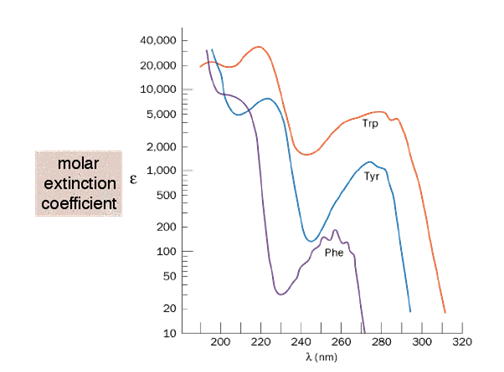 Figure 1: UV absorption spectra of three aromatic amino acids: phenylalanine, tryptophan, and tyrosine (adapted from https://www3.nd.edu/~aseriann/CHAP9B.html/sld013.htm)
Sensitisation
The most significant type of sensitisation for cosmetic products is contact dermatitis which is characterised by mostly involving T-cells (type IV sensitisation). It is generally accepted that the key molecular initiating event for skin sensitizers are electrophilic interactions with nucleophilic groups on skin proteins such as cysteine and lysine units. This covalent binding leads to activation of keratinocytes, dendritic cells, and finally T-cell activation and proliferation finally manifesting as local effects such as redness and itching, symptoms commonly mistaken for irritation but have an immunological mode of action.
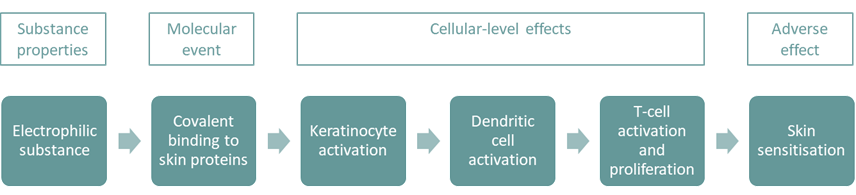
Figure 2: Molecular mechanisms of skin sensitisation
Another important mechanism is based on free radical reactions (Roberts et al., 2012). Since covalent binding and generation of free radicals are not expected for proteins and peptides, and because the absorption of such compounds is expected to be low, the risk of skin sensitization is considered to be low.
However, given that many proteins and peptides present in food also serve as allergens, proteins and peptides as used in cosmetics should be assessed for this type of allergenicity. Specifically, immediate hypersensitivity such as allergy and anaphylaxis involve different mechanisms compared to contact dermatitis. In type I sensitisation, the effector cells are mostly antibody-producing cells such as mast cells and IgE antibodies. However, from of the scientific opinions of the SCCS and CIR on hydrolysed wheat proteins, it becomes clear that peptides with molecular weight below 3.5 kDa have a low sensitization capacity (SCCS, 2014). This is based on the molecular mechanism that, for a type 1 sensitization reaction to occur an allergen must bind two IgE antibodies. Therefore, an allergen must contain at least two IgE binding sites each with a minimum of 15 amino acids in length. This implies that the minimal size for proteins allergens is approximately 30 amino acids (Huby, 2000).
While this was included in the case of wheat proteins, it may be applicable to other food allergens, and therefore proteins and peptides as a whole, given that the binding of more than two IgE antibodies is a known key initiating event. Recent advances in molecular biological techniques have enabled the efficient analysis of food allergens. IgE-binding epitopes can be divided into two types, linear (sequential) and conformational (discontinuous). Linear epitopes comprise continuous amino acid sequences, while conformational epitopes are formed by spatially adjacent amino acids that are distantly located in the amino acid primary sequence of the proteins. As a result, many food allergens have been identified, and their molecular structure and IgE-binding epitopes have also been mapped (Matsuo et al., 2015). Specifically, it was shown that all known allergens from chicken eggs, cow’s milk, shrimp, and peanut all had a molecular weight of greater than 3.5 kDa, the smallest allergenic protein being Ara h 12 of size 5.2 kDa. Therefore, if the size of the peptide or protein used in the cosmetic raw material can be guaranteed to be below 3.5 kDa, risk to type I sensitisation would be considered to be low.
Potential hazard to human health – a case for next generation risk assessment
Based on what was discussed above, one might assume that peptides and proteins do not have significant toxicological profiles or risk to human health. Such an assumption would be premature and potentially incorrect. In fact, while peptides and proteins are expected to have limited off-target effects compared to their chemical predecessors, some may harbour hazard to human health that is governed by exaggerated pharmacology or on-target effects. For instance, proteins in the form of receptors and enzymes are considered as the functional units that facilitate normal bodily functions. The same is true for peptides which include signalling molecules. As such, if an imbalance in homeostasis were to occur through increased or decreased activity, adverse effects could arise. However, such “exaggerated pharmacological” events are not easily identified in current toxicological testing approaches.
To identify potential hazard to human health, and given the nature of proteins and peptides in that a cascade of biological events that could lead to an adverse effect, a holistic approach would be needed. For this, it could be envisioned that next-generation omics technologies would help greatly. Briefly, these technologies allow a comprehensive overview of molecular events occurring at a gene and protein level. Once a network of affected genes and/or proteins are identified, this can then be tied to molecular modes of action know to give risk to adverse health effects. This is in line with the Adverse Outcomes Pathway (AOP) approach where apical adverse health effects are predicted from molecular initiating events, an approach greatly gaining traction in regulatory toxicology. Furthermore, targeted in vitro tests that are already available could be used to identify potential modes of action and that are known to lead to an adverse effect. In both cases, whether using omics technologies or a battery of currently available targeted in vitro tests, it would be pertinent to then identify and extrapolate treatment doses at which these effects are seen molecularly to equivalent internal in vivo doses using quantitative In Vitro to In Vivo Extrapolation (qIVIVE). Further Physiologically Based Pharmacokinetic (PBPK) models could be used to correlate the internal extrapolated in vivo dose to an external, dermally applied dose. Such an approach with all its components would result in an accurately identified point of departure to be used for quantitative risk assessment, accurate external doses, and the decreased use of uncertainty factors. Additionally, application of tools currently used for chemically defined small molecules such as Thresholds of Toxicological Concern (TTC) and Structure-Activity Relationships (SAR) may be used to substantiate safety in the future, but first need to be developed specifically for peptides and proteins.
It should be noted that successful implementation of these next-generation risk assessment approaches would require developing skills in these fields, while ensuring that testing is not cost-prohibitive. Furthermore, some AOPs have been developed and validated while others are at various stages of acceptance and development. In fact, there is still a significant amount of work needed to map toxicological molecular pathways such as AOPs. As can be seen, the application of next generation risk assessment is multidisciplinary, with expertise needed in a number of fields ranging from molecular biology, bioinformatics, statistics, modelling, and traditional toxicology. As such, discussing in greater detail falls outside the scope of this article.
Conclusion
Peptides and proteins benefit from a number of properties that would limit their risk to human health. These properties are especially important in light of the animal testing ban for cosmetic ingredients and where toxicologists have to rely on data and tools other than traditional animal toxicological tests. Nevertheless, significant modification to these ingredients should be avoided to maintain these characteristics. These briefly include:
- No extensive modification to significantly increase absorption – this serves to maintain the central dogma of toxicology; limited exposure = limited risk
- Limited modifications to amino acids – natural amino acids are not expected to be genotoxic, carcinogenic, nor reproductive toxicants while being rapidly metabolised
- Limit amount of aromatic amino acids – this serves to limit the potential for phototoxicity
- Include purification steps in production processes – this serves to limit carry-over of potentially dangerous impurities
Furthermore, as mentioned in “Regulatory aspects of peptides & proteins as cosmetic ingredients”, cosmetics and drugs are distinguished based on their intended uses which is primarily driven by their claims and how these products are presented and perceived by the consumer. However, based on the Working Group on Cosmetic Products manual on borderline products, substances which restore, correct, or modify physiological functions by exerting pharmacological activities are identified by “virtue of its presentation” or “by virtue of its function”. The latter is “assessed by considering all characteristics of the product including absorption, concentration, route of administration, frequency of application, application site, and the degree of penetration”. As such, it becomes obvious the role of understanding how peptide and protein characteristics interact and drive toxicological profiles in determining whether an ingredient is a drug or cosmetic.
Finally, while these novel cosmetic ingredients likely harbour low risk to human health, one cannot conclude that there is no risk to health. This is due to the fact that current testing approaches and legal frameworks for cosmetic ingredients are not sufficient to elucidate such effects. As such, a next-generation approach to risk assessment is needed relying on in vitro mechanistic data and complex extrapolations by models. While guidance is presently being established for these approaches (Rogiers et al., 2020), current uncertainty in hazard to human health is managed by limited exposure and bioavailability to those ingredients when used in cosmetic applications if data is not available.
Owing to expertise in a number of relevant fields. kriTOX can help you define the best strategy for your products. Please click here should you need more information about cosmetic ingredient services.
Published by Boris Krivoshiev, PhD – Founder and Principal Toxicologist at kriTOX
References
Badenhorst, T., Svirskis, D. and Wu, Z. (2014) ‘Pharmaceutical strategies for the topical dermal delivery of peptides/proteins for cosmetic and therapeutic applications’, Austin J. Pharmacol. Ther, 2, pp. 1–10.
Choi, Y. L. et al. (2014) ‘Dermal stability and in vitro skin permeation of collagen pentapeptides (KTTKS and palmitoyl-KTTKS)’, Biomolecules and Therapeutics, 22(4), pp. 321–327. doi: 10.4062/biomolther.2014.053.
EFSA (2016) Outcome of the pesticides peer review meeting on general recurring issues in mammalian toxicology. Wiley Online Library.
European Medicines Agency (2011) Questions and answers on the ‘ Note for guidance of photosafety testing ’, European Medicines Agency. Available at: http://www.ema.europa.eu/docs/en_GB/document_library/Other/2011/04/WC500105109.pdf.
FDA (2020) Safety Testing of Drug Metabolites Guidance for Industry.
Gocke, E. et al. (1999) ‘Genotoxicity testing of biotechnology-derived products: Report of a GUM task force’, Mutation Research – Reviews in Mutation Research, 436(2), pp. 137–156. doi: 10.1016/S1383-5742(99)00002-2.
Henry, B., Foti, C. and Alsante, K. (2009) ‘Can light absorption and photostability data be used to assess the photosafety risks in patients for a new drug molecule?’, Journal of Photochemistry and Photobiology B: Biology, 96(1), pp. 57–62. doi: 10.1016/j.jphotobiol.2009.04.005.
Huby, R. D. J. (2000) ‘Why Are Some Proteins Allergens?’, Toxicological Sciences, 55(2), pp. 235–246. doi: 10.1093/toxsci/55.2.235.
International Conference on Harmonisation (2011) Preclinical safety evaluation of biotechnology-derived pharmaceuticals.
International Conference on Harmonisation (2013) Photosafety evaluation of pharmaceuticals.
Kraeling, M. E. K. et al. (2014) ‘In vitro skin penetration of acetyl hexapeptide-8 from a cosmetic formulation’, 9527, pp. 1–7. doi: 10.3109/15569527.2014.894521.
Matsuo, H., Yokooji, T. and Taogoshi, T. (2015) ‘Common food allergens and their IgE-binding epitopes’, Allergology International, 64(4), pp. 332–343.
Mitra, M. S. et al. (2020) ‘Development of peptide therapeutics: A nonclinical safety assessment perspective’, Regulatory Toxicology and Pharmacology, 117, p. 104766.
Pannatier, A. et al. (1978) ‘The skin as a drug-metabolizing organ’, Drug metabolism reviews, 8(2), pp. 319–343.
Roberts, D. W. et al. (2012) ‘Sodium metabisulfite as a contact allergen–an example of a rare chemical mechanism for protein modification’, Contact dermatitis, 66(3), pp. 123–127.
Rogiers, V. et al. (2020) ‘The way forward for assessing the human health safety of cosmetics in the EU – Workshop proceedings’, Toxicology, 436. doi: 10.1016/j.tox.2020.152421.
SCCS (2014) Opinion on hydrolysed wheat proteins. doi: 10.2772/47567.
Zeranska, J. et al. (2016) ‘A study of the activity and effectiveness of recombinant fibroblast growth factor (Q40P/S47I/H93G rFGF-1) in anti-aging treatment’, Postepy Dermatologii i Alergologii, 33(1), pp. 28–36. doi: 10.5114/pdia.2014.44024.